A two-component therapy for adults with late-onset Pompe disease (LOPD) weighing 88 lbs or more who are not improving on their current enzyme replacement therapy (ERT).
EDUCATION + ACTION a more informed you
MADDIE
DIAGNOSED WITH LOPD IN 2009
LOPD IS A RARE LYSOSOMAL DISEASE
THAT CAUSES MUSCLE WEAKNESS
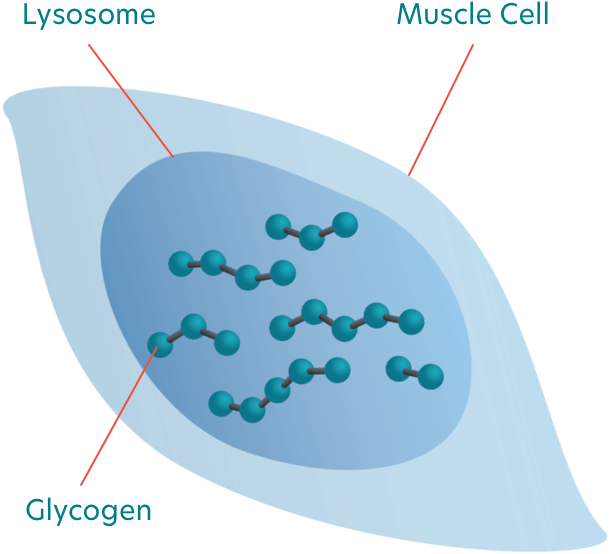
People with LOPD are deficient in a certain type of enzyme, called acid alpha-glucosidase (GAA) The GAA enzyme is responsible for breaking down glycogen into glucose.
When excess glycogen builds up in the lysosomes, it causes damage to the muscles throughout the body. This leads to mobility problems and respiratory issues as the muscles responsible for movement and breathing begin to break down.

WHAT CAUSES POMPE DISEASE?
Pompe is a genetic disease caused by mutations of the GAA gene. For a person to have Pompe disease, GAA mutations must be inherited from both parents. If 1 of the 2 inherited GAA genes is normal, a person will not have Pompe disease, but would be considered a “carrier”—meaning they may pass the mutation to their children.
WHAT IS LATE-ONSET POMPE DISEASE (LOPD)?
LOPD causes symptoms that may not be noticeable at first and can mimic other disorders. People with Pompe disease have low levels of GAA enzyme activity, which limits their body’s ability to break down glycogen. Due to the damage this glycogen buildup may cause to the muscles involved in walking and breathing, some people with LOPD eventually require the use of assistive devices.
In individuals with LOPD, GAA enzyme activity can typically range anywhere from 2% to 40% of what’s considered normal. Because of this wide range, the amount of GAA enzyme activity each person has can generally impact the severity and progression of their disease.
Enzyme replacement therapy (ERT) replaces the natural GAA that people with LOPD lack. But it can become vulnerable and lose function once infused into the bloodstream.
LOPD CAN TAKE UP TO 10 YEARS TO DIAGNOSE
LOPD is difficult to diagnose and often misdiagnosed, in part because it’s a rare disease, but also because its symptoms can often feel disconnected and mistaken for other conditions. This can result in a long and frustrating diagnostic journey.
LOPD TREATMENT CHALLENGES
When ERT is infused into the blood, it can lose its shape and function. As a result, only a fraction of active ERT is available. The next challenge is that ERT must bind to and enter the muscle cells to be processed into its most active form to break down excess glycogen.
Many people who received ERT (alglucosidase alfa) began experiencing declines 3-5 years after starting treatment.
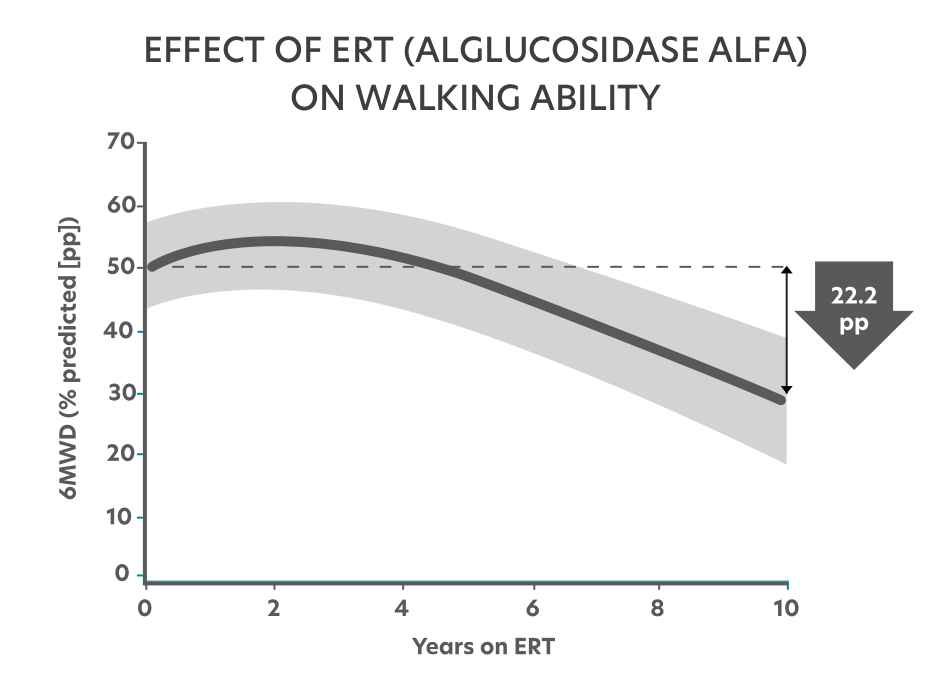
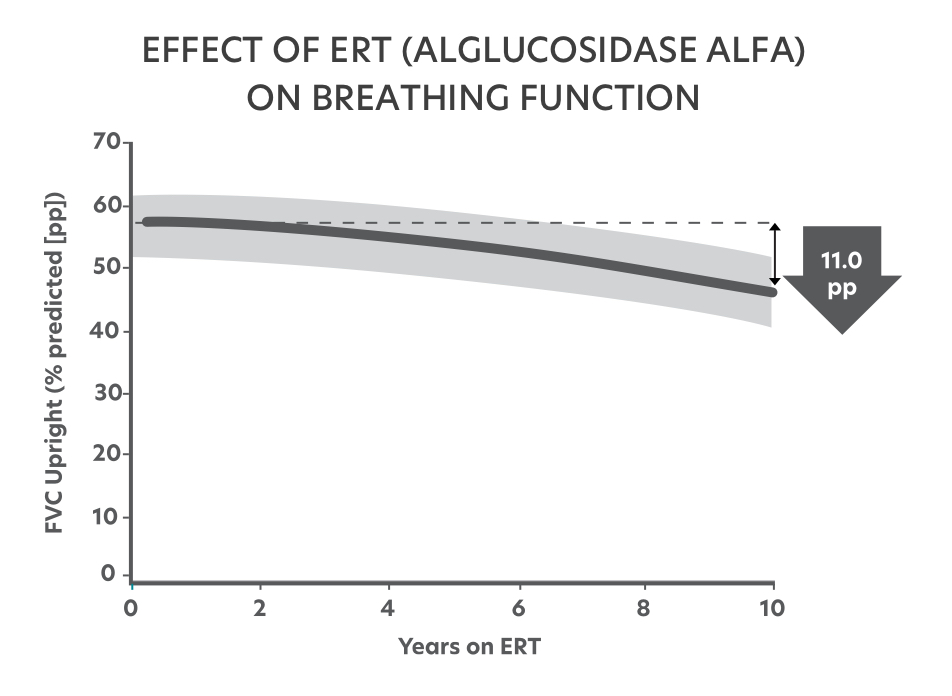
Source: Adapted from Harlaar L, Hogrel JY, Perniconi B, et al. Large variation in effects during 10 years of enzyme therapy in adults with Pompe disease. Neurology. 2019;93(19):e1756-e1767.

“Once I was diagnosed, it was really important to start thinking about treatment and disease management options.”
—
Maddie on the importance of creating a treatment plan with her medical care team